
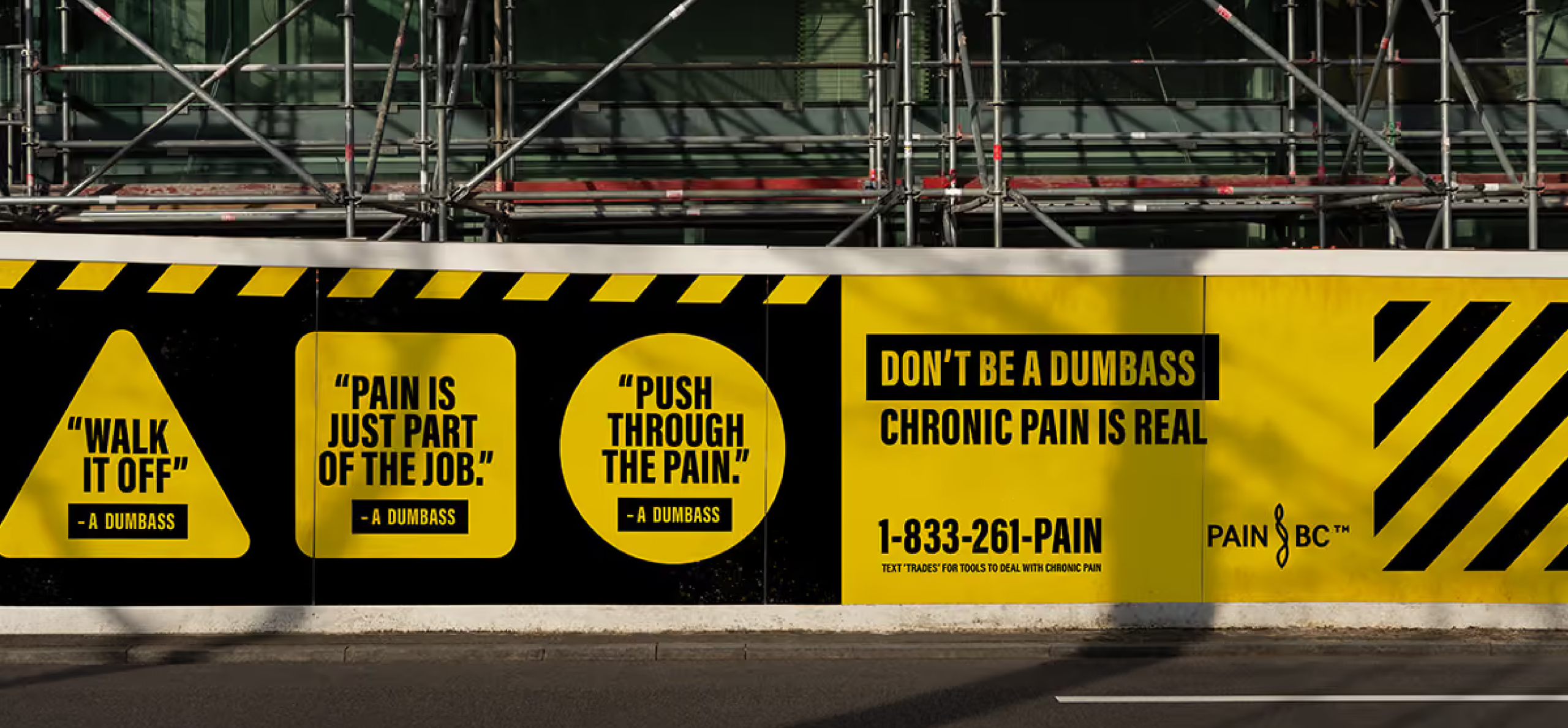
Managing pain should be a part of your job site safety strategy
The morning routine on job sites across BC starts with a safety supervisor leading toolbox talks, reviewing job site hazards, and ensuring everyone has their protective gear. While employers and management invest heavily in preventing accidents on-site, there are far fewer protocols for managing the physical pain that comes with the job; pain that silently affects workers across British Columbia every single shift.
Physical pain is an unavoidable cost in the construction industry. Heavy lifting, repetitive movements and awkward positions while working take a heavy toll on the body over time. Strains, aching joints and persistent back pain are frequently brushed off with a suck it up attitude.
While acute pain typically resolves within three months, chronic pain lasts for more than three months and can persist even after tissues have healed. Chronic pain can be complex and invisible because the causes can be unknown and may involve increased sensitivity within the nervous system.
Ignoring acute pain over time or pushing through minor injuries without proper management may lead to chronic pain, long-term disability, mental health struggles, and early exit from the workforce. As leaders grappling with how to cultivate a safe supportive worksite, we need to start treating chronic pain the same way we treat site hazards to reduce the lasting impacts of pain.
Hidden risks of ignored pain on job sites
When workers feel they need to ‘push through’ the pain, it creates risks for both the individual and those around them.
Preventing chronic pain, therefore, is fundamental to businesses as safety, retention, and risk management priorities.
Equipping site leaders with the Trades and Pain Safety Toolbox Talks Guide
To enable job sites to include chronic pain in regular safety meetings, we have created a Trades and Pain Toolbox Talks training guide developed in partnership with an Advisory Committee from the trades.
The guide includes eight topics supported by scripts, infographics, and videos – each lasting 10 minutes. Site supervisors can deliver them during regular crew safety huddles so that conversations about pain can be normalized. The scripts are relatable and grounded in reality, and crew members can watch the short supporting videos on their phones during safety talks.
By integrating these 10-minute talks into safety schedules, it reminds workers that their physical health is important to their work, encouraging them to start choosing support over silence.
As Shayna Helal, Chief Safety Officer of Mott Electric shared, “I think this is a fantastic resource that will be really beneficial for our electricians. The videos are especially useful and keep things interesting.”
If you would like to add chronic pain safety talks to your meetings, email us at tap@painbc.ca. We will share the resources and walk you through the process for a seamless integration.
The Guide Line – Free confidential text line for all BC trades workers
In response to what we have heard from workers, our Guide Line is staffed by social workers and counsellors who connect tradespeople living with pain to practical support, resources, peer support and information that can help reduce the impacts of pain and improve quality of life.
Workers can text “trades” to 1-833-261-PAIN (7246) and our counsellors can help by providing a safe, private space where they can talk about how they are dealing with pain and how it’s affecting their life. They can also share resources and information related to chronic pain, mental health, and substance use programs designed for and with people working in trades.
And it’s meeting the need. One individual who contacted the Guide Line said, “The text line offered compassionate support and the clarity I needed to stop just surviving the day and actually start managing my pain.”
Another worker shared, “I truly appreciate the convenience of text. Very wonderful service provided by the Guide Line.”
Steps we need to take to protect workers from chronic pain
As employers and leaders, we need to encourage more conversions around pain to combat the “push through” culture that is contributing to down steam affects like absenteeism and even people exiting this vital sector.
Protecting workers from chronic pain is a safety measure that will build a stronger and supportive site culture. By helping to address pain early, skilled trades workers can feel more supported and know that no one has to live alone with pain.
If you would like to help your crew deal with chronic pain, get in touch with us today by emailing us at tap@painbc.ca
